
Box 2 Procedure for Sampling Wells
So‑called copper tube samples are easy to transport or ship to the lab given that
- the ends of the copper tube are not damaged or bent so far as to break, and
- the samples do not freeze, which can expand and break the copper tube.
An example copper tube configuration consists of 0.95 cm diameter copper tubing of about 50 cm in length. A copper tube of this size will contain about 18 to 20 mL of water sample (Solomon et al., 1992, Solomon et al., 1993). Figure Box 2‑1 shows key aspects of copper‑tube sampling, including
- inspection of groundwater flowing through the outlet tubing to be sure bubbles—from degassing and/or air leakage in pump tubing—are not present prior to sampling, and
- tilting the copper tube upward to allow bubbles to escape the copper tube prior to sealing.
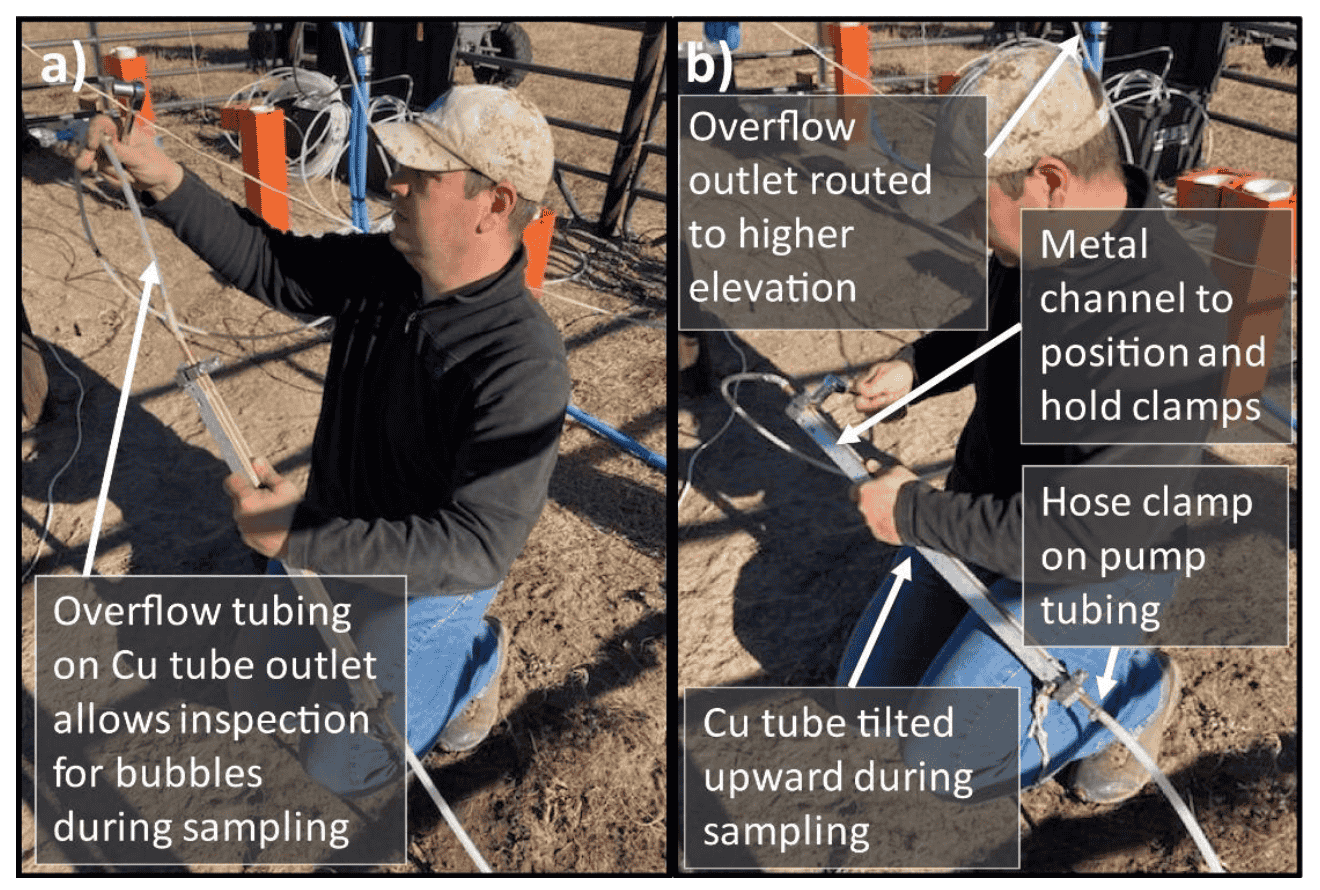
Figure Box 2‑1 ‑ Key procedures for sampling groundwater from wells, using the copper tube (Cu tube) method (modified from Gilmore et al., 2021 and used with permission).
Before collecting water samples, wells should be purged according to standard procedures, withdrawing, and disposing of, a volume of well water at least three times the bore volume, and/or when field parameters—e.g., conductivity, pH, temperature—stabilize. When sampling a well using a submersible pump, it is ideal to purge the well by placing the pump near the top of the water column in the well. Purging with the pump near the top of the water column helps to remove well water that may be partially equilibrated with the air in the well casing. The pump inlet can then be lowered toward the well screen before collecting the sample.
When the tubing is filled with a groundwater sample, each end of the tube is sealed with a refrigeration clamp (Figure Box 2‑1a) that is machined to very precise specifications to provide a completely airtight seal but not pinch off the copper tubing to the point that it breaks. Figure Box 2‑1b shows an example metal channel used to position and hold clamps while they are tightened.