
14.2 Distribution of Water in the Shallow Subsurface
Saturation
At the surface of the Earth, the soil, sediment, or rock have some porosity, and some fraction of that porosity contains water. Thes fraction of porosity that contains water is called the degree of saturation ([latex]S_{d}[/latex]) and is defined in Equation (106). This quantity can be expressed as a fraction or, if multiplied by 100, as a percentage.
| [latex]S_{d} = \frac{{volume}_{water}}{{volume}_{voids}}[/latex] | (106) |
|---|
The degree of saturation tends to increase with depth, and the point at which the degree of saturation reaches 100 percent marks the boundary between the saturated zone below and the unsaturated zone above (Figure 110).
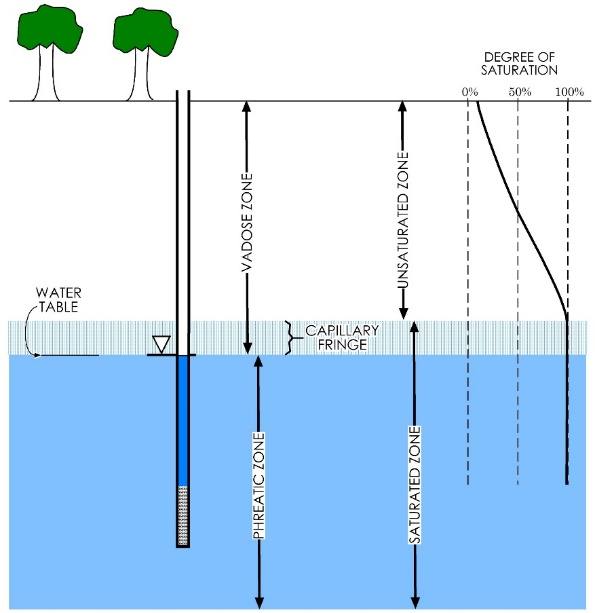
Figure 110 ‑ Cross‑section showing the distribution of water in the subsurface.
This boundary is often considered to be the same as the water table, which we previously defined as:
- the point in an unconfined aquifer in the zone of saturation where the pore‑water pressure and the atmospheric pressure are equal, and
- the level to which water will rise in a well completed in an unconfined aquifer.
It may seem like we are making this unnecessarily complicated, and we should just define the water table as the boundary between the saturated and unsaturated zones, but the truth is that the two are not exactly the same because of capillarity.
Capillary Forces
To understand the role of capillary forces in groundwater, we first need to understand a little about pore fluid pressures. Let us consider a coffee cup that is half full of water—or half empty depending on your emotional outlook at the moment. Atmospheric pressure is pushing down on the water in the cup (Figure 111), and at the surface of the water the fluid pressure in the water is equal to the atmospheric pressure—for every force there is an equal and opposite force, as you may recall from your high‑school physics class. Then, below the surface, fluid pressures increase with depth in the cup as the column of water above it increases.
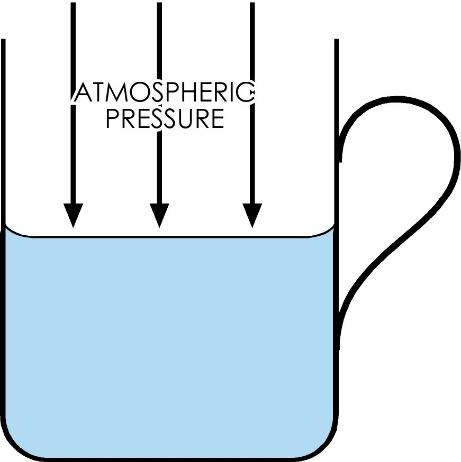
Figure 111 ‑ Coffee cup half‑full of water.
Now let us consider that the coffee cup is full of dry sand. If we pour some water into the cup so that the bottom half of the cup is saturated, we will have a surface in the middle of the cup that separates the saturated zone from the unsaturated zone. Atmospheric pressure is pushing down on the water in the pore spaces in the sand just like in the cup in Figure 111, and at the surface of the water, the pore fluid pressure is equal to the atmospheric pressure (Figure 112a). At any point below the surface, the pore fluid pressure is equal to the atmospheric pressure plus the pressure associated with the column of water above that point.
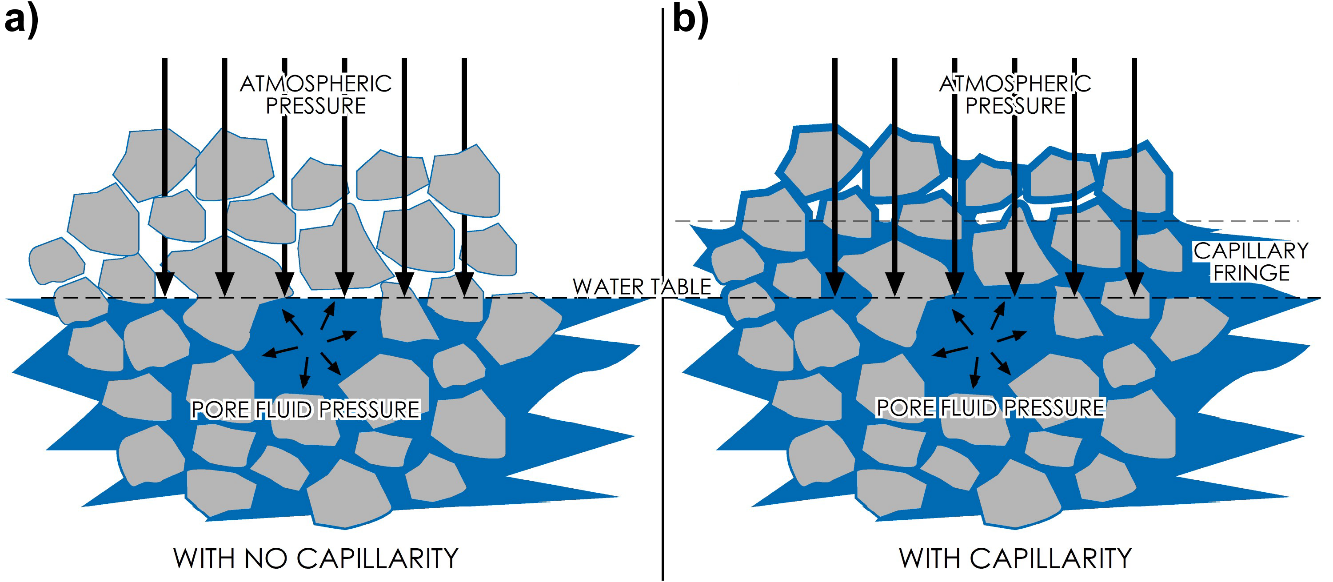
Figure 112 ‑ Schematic diagram showing the interface between the saturated zone and the unsaturated zone a) with no capillarity, and b) with capillarity.
Up to this point, we have ignored atmospheric pressure in our calculations of hydraulic head in groundwater. This is because we use atmospheric pressure as the reference pressure so we define it as zero pressure. When dealing with unsaturated zone problems, pore fluid pressures are less than atmospheric, and given that we define atmospheric pressure as zero, pressures in the unsaturated zone are negative.
The polarity of water molecules (Figure 1) gives water a high surface tension and makes it ‘stick’ to things. Near the water table, the force associated with surface tension is enough to counteract the force of gravity and pull water upwards along mineral surfaces. This can be demonstrated by dipping the edge of a paper towel into water and watching the water move up into the towel against the pull of gravity. Porous rock or sediments are just like the paper towel—there is a lot of surface area in the pore spaces, surface tension causes water to stick to those surfaces, and water gets pulled upward from the water table. This force pulling water up into the pore spaces above the water table is called capillarity, or the capillary force. The capillary forces at work in the unsaturated zone pull enough water up above the water table to create a thin saturated zone above the water table called a capillary fringe (Figure 110 and Figure 112b). Capillary forces are greater when the openings are small so the capillary fringe is thicker in fine-grained materials and when the grains such as clay carry charge that attracts water molecules.
The capillary forces that are pulling water up into the capillary fringe are offsetting the forces of gravity that are pushing water down towards the water table. As we move from the water up into the capillary fringe, pore fluid pressures decrease. We can then define the capillary fringe as the part of the saturated zone in which pore fluid pressures are less than atmospheric pressure.
Figure 110 shows that the subsurface is separated into the saturated zone and the unsaturated zone, and the boundary between the two is the top of the capillary fringe. We also separate the subsurface into the vadose zone—the zone where pore fluid pressures are less than atmospheric pressure—and the phreatic zone—where pore fluid pressures are greater than atmospheric pressure. The surface that separates these two zones is the water table.
Often you will hear vadose zone and unsaturated zone used interchangeably—similarly the phreatic and saturated zone terms are used interchangeably. This is usually ok, since the capillary fringe is generally thin and probably not that important in most groundwater flow problems. However, it is useful to be aware of what vadose and phreatic really mean, and that in a strict sense, vadose and unsaturated are not the same.
Thought Question 16: The thickness of the capillary fringe is not constant; it varies from aquifer to aquifer and from place to place in a single aquifer. What factors affect the thickness of the capillary fringe?