
Solution Exercise 2
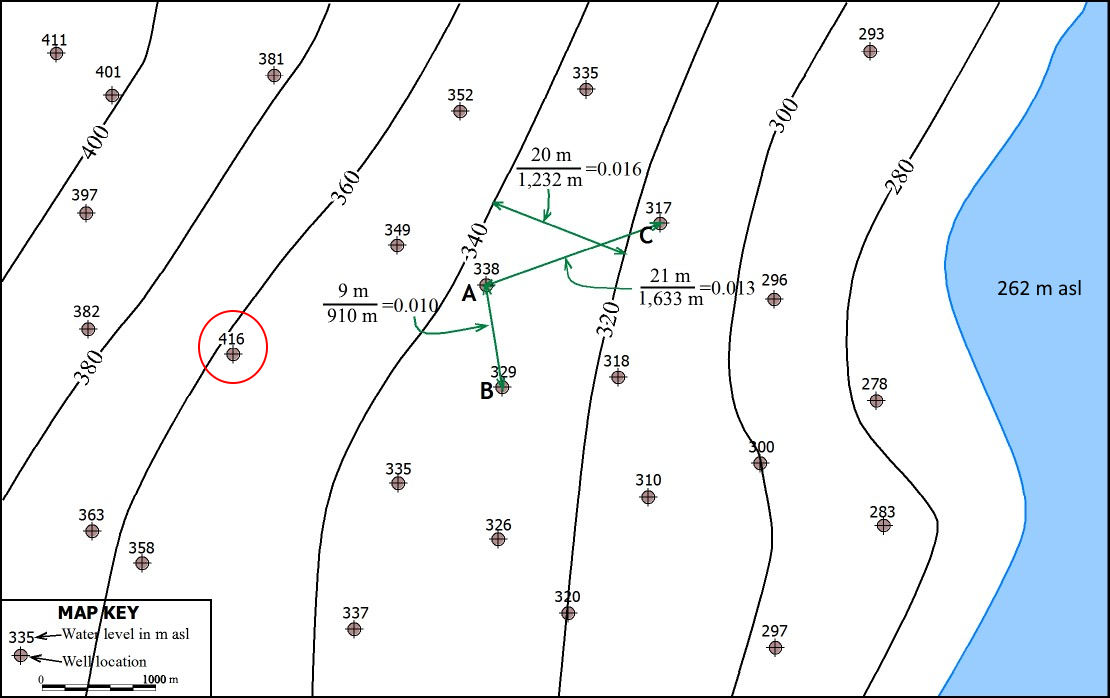
a) AB: [latex]\frac{9\ m}{910\ m}[/latex] [latex]=[/latex] 0.010
AC: [latex]\frac{21\ m}{1,633\ m} =[/latex] 0.013
b) See map. Circled value appears to be too high compared to the other values.
c) See map. 0.016 This value is greater than the values of gradient between wells because it is calculated as the maximum gradient, which in an isotropic material is the direction of flow.
d) Reason and How to identify.
Reason: Erroneous data point (incorrectly measured or recorded, bad survey data).
How to identify whether this is the reason: Re‑measure or resurvey; check previous data values.
Reason: Problem with well (screen is clogged, water level is standing surface water).
How to identify whether this is the reason: Pump well and check recovery; downhole camera survey.
Reason: Surface recharge feature in area (pond or other standing water; leaking underground pipes).
How to identify whether this is the reason whether this is the reason: Perform field survey; check underground lines in area.
Reason: The well is completed in a different formation.
How to identify: Check well depth against depths of other wells; review driller’s logs and other stratigraphic information at site; look for other wells in upper or lower formations and compare with their water levels.
Reason: Nearby injection well (possibly for remediation or mitigation).
How to identify whether this is the reason: Field survey; review state and federal permits for injection wells to determine if any are nearby.
Additional option:
Reason: May not be anomalous; may not be enough data to show that there is a good reason for high water levels at that point.
How to identify whether this is the reason: Look for additional data to the west.