
13.1 Pumping Test Analysis Software Packages
The three software packages described this section include AQTESOLV (http://www.aqtesolv.com↗), AquiferTest V12 (waterloohydrogeologic.com↗), and Aquiferwin32 Version 6 (groundwatermodels.com↗). Each includes a number of analytical models that can be used to analyze pumping tests of confined, leaky confined, unconfined, and fractured‑rock or dual‑porosity conditions. They also provide analysis of step‑drawdown tests and slug tests. Both drawdown and recovery data can be assessed.
Each program provides the user with a number of methods to assess pumping tests. For example, AQTESOLV software addresses application of 13 solution techniques for confined‑aquifer conditions, seven for leaky aquifers, five for unconfined systems, five for fractured aquifers, and nine solutions for constant‑head tests (Figure 98).
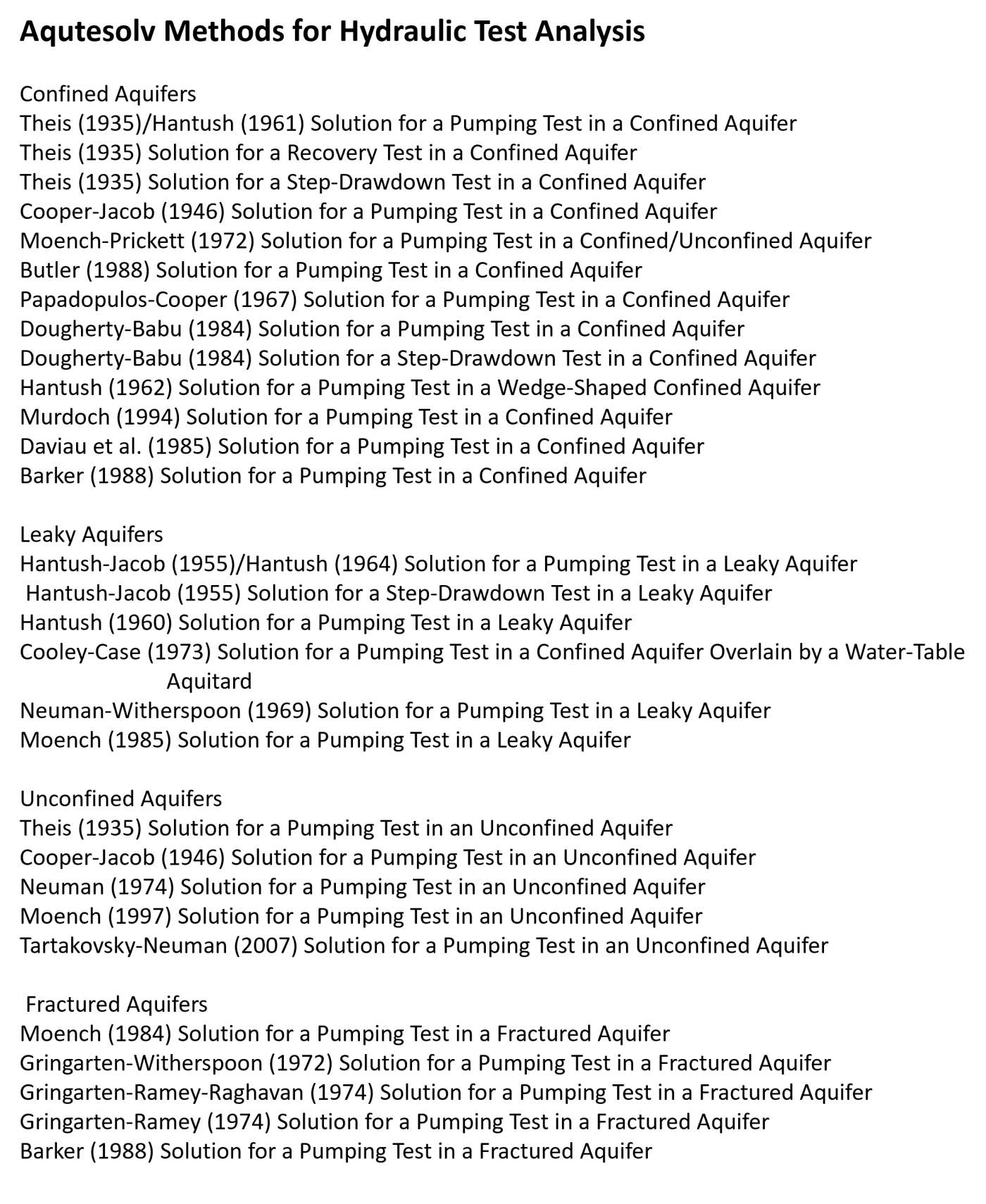
Figure 98 ‑ Example of analytical solutions describing conditions in confined, leaky confined, unconfined, and fractured aquifers provided by the standard and professional versions of AQTESOLV. The solutions are organized by pumping tests of confined, leaky confined, unconfined, and fractured aquifers. References for each supported analysis method are listed. Full references are provided in the reference section of this book. Professional judgment is used to appropriately match the model to the field conditions prior to applying one of these models (modified from http://www.aqtesolv.com).
These software packages provide complete references for incorporated analytical solutions and include detailed information on the related simplifying assumptions, limitations, and application of each solution. Many of the methods are also described in the work of Kruseman and de Ridder (2000), Analysis and Evaluation of Pumping Test Data↗, a book that is available free‑of‑charge on the gw-project.org↗ website. Users should become familiar with the specific analytical model before applying it to analyze hydraulic‑test data. The appropriate conceptual model and corresponding limitations must be recognized to avoid misuse of a selected solution.
An example of the type of documentation provided by the software AQTESOLV to address unconfined pumping‑test results is presented in Figure 99.
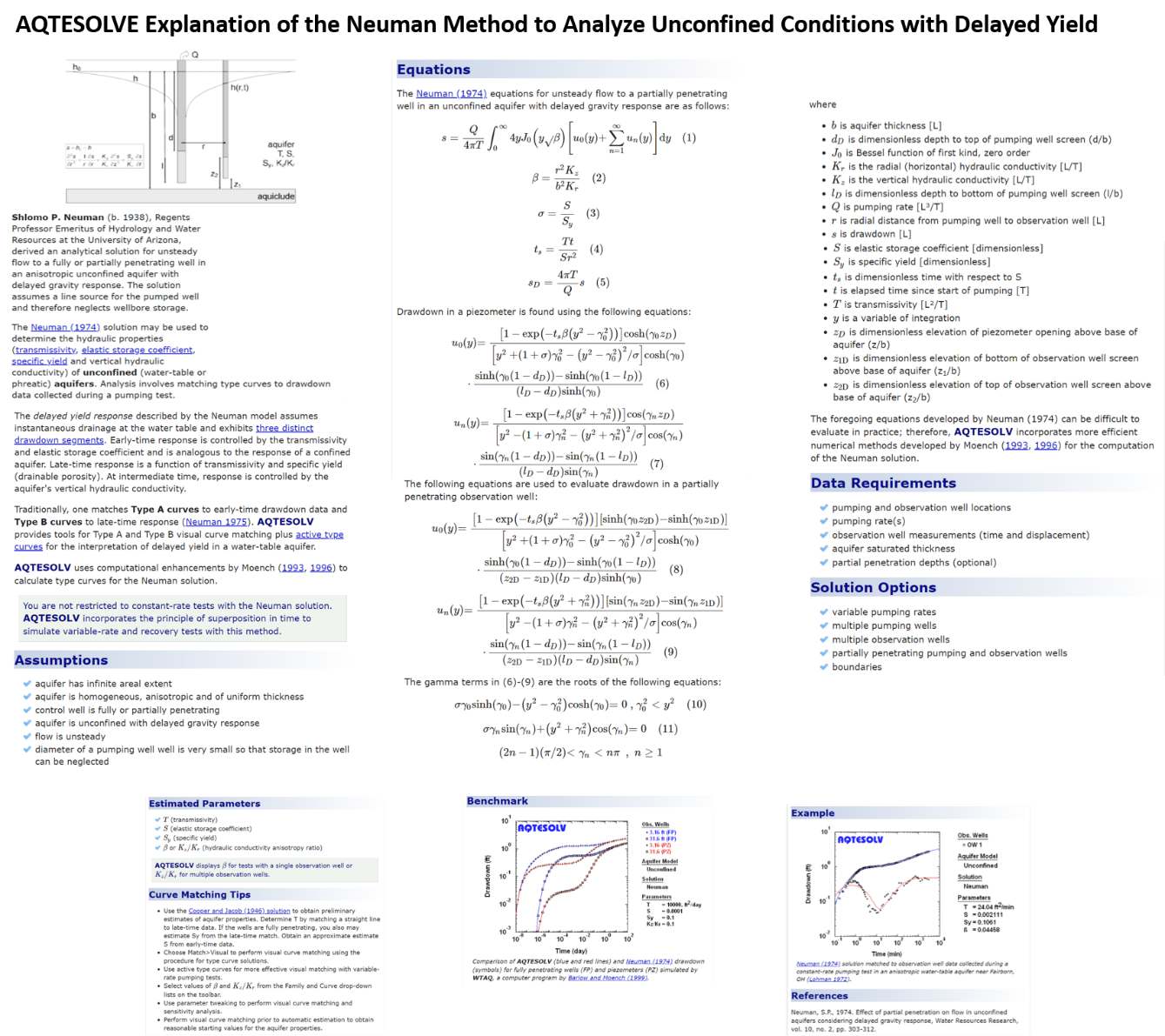
Figure 99 ‑ Explanation of the Neuman solution for unconfined aquifers as presented in AQTESOLV. A general description, assumptions, the analytical equation, data requirements, solution options, estimated parameters, curve matching tips, benchmark, example, and the reference are provided (from the aqtesolv.com web site).
All too often, some software users try to fit all the models available in a software package to the test data until they find a fit. However, a selected analytical model must match the appropriate site conceptual model and hydrologic conditions. A confined fractured‑rock solution (Baker, 1988; Figure 98) does not appropriately represent the behavior of an unconfined sand and gravel aquifer! Additional concerns are expressed by experienced users. Van der Kamp & Neville (personal communication, 2023) make three important points:
- Computer‑assisted interpretation packages are frequently applied with separate analyses for the pumping well and the individual observation wells. This practice should be avoided. The user is responsible for obtaining internally consistent parameter estimates and for identifying those wells for which the responses are not representative of the bulk formation. Obtaining varying parameter estimates by fitting a model that assumes constant parameters only demonstrates that the data are being matched with the wrong model.
- The software may obtain non‑physical parameter estimates. It is up to the user to identify when a parameter estimate is unrealistic, and to understand why.
- Although the software may report parameter estimates with many significant figures, hydrogeologists should never do so.
Available software packages are powerful and extremely useful when properly applied.