
4 Setting a Purpose, Designing, and Conducting a Pumping Test
Procedures to design and conduct pumping tests are described in many hydrogeology and engineering textbooks, government publications, and elsewhere in scientific literature. Some useful examples of guidelines are provided by the United States Environmental Protection Agency (Osborne, 1993), British Standard (2003), Standards Australia (2006), Washington State Department of Ecology (2020), and the book Groundwater and Wells (Sterrett, 2007). The American Society for Testing and Materials (ASTM) has at least 13 documents describing standard procedures that should be used to conduct and analyze pumping tests. A list of these ASTM documents is provided in a document produced by the United States Nuclear Regulatory Commission (2015). The approaches and methods described herein for conducting successful pumping tests are based on guidelines such as those cited above as well as professional experience. A flow chart of the key components for setting up and conducting a pumping test is shown in Figure 10.
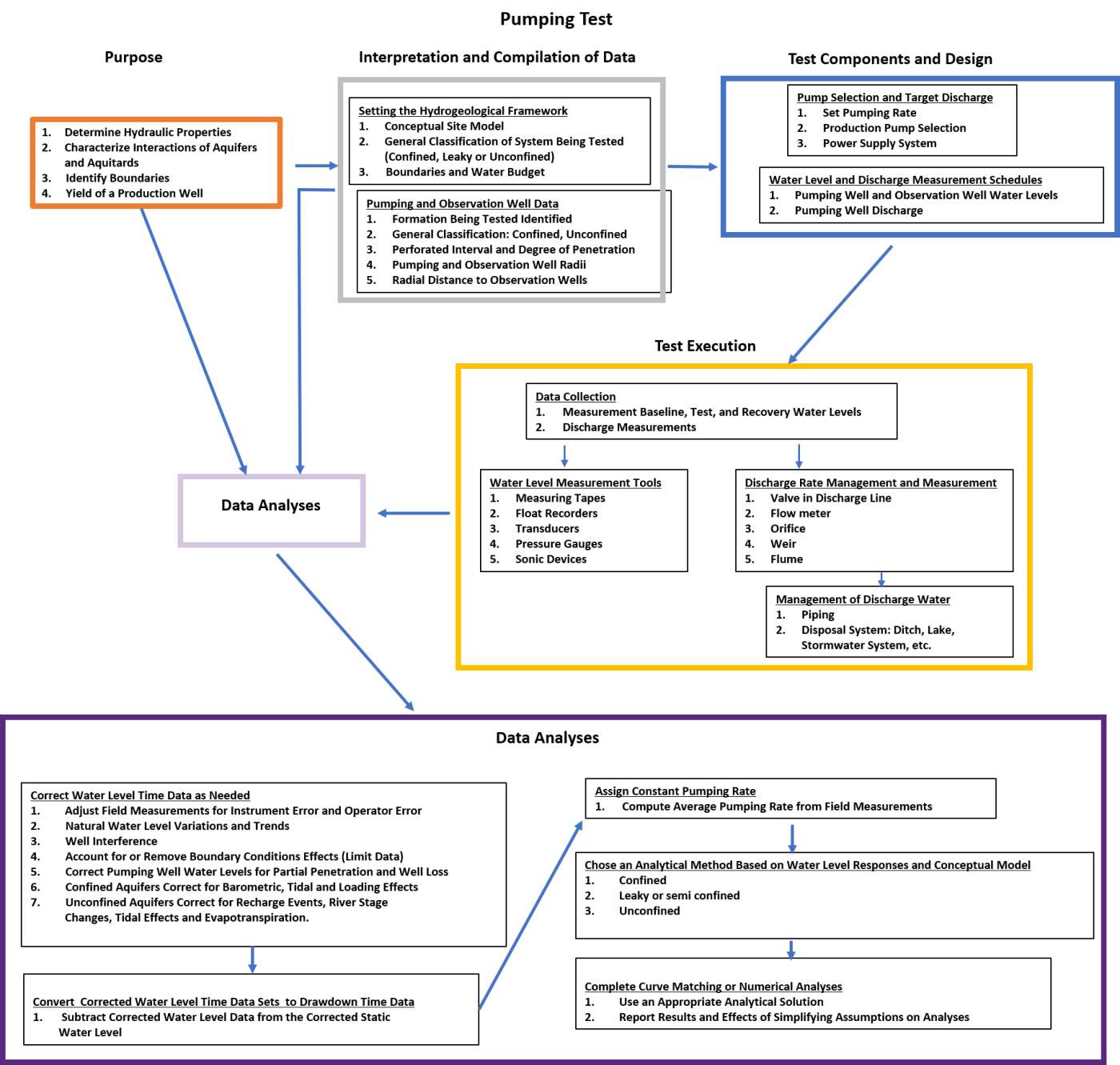
Figure 10 – Development of information and data required to plan, execute, and analyze a pumping test.
a) The first step is to identify site and regional hydrogeologic conditions that will affect test design and resulting interpretation. A hydrogeologic conceptual model of the site and region is developed. This process includes collecting and interpreting geologic and hydrogeologic information including specifics on existing water bearing units and wells. The second step is to design the pumping test. Hardware requirements are identified, then pumping rates and test duration are planned. Next, measurement schedules are developed including monitoring of background water levels before and after testing. The third step is to initiate the test including pretest data collection and well instrumentation. The test is executed, while drawdown, time, and discharge data are recorded. When pumping stops, recovery water levels are recorded along with continued background water level recording. Once the test is complete the conceptual model and observed water level and pumping data are processed to determine hydrogeologic properties of the tested formations.
b) Data analysis includes several steps. First the measured water level data are organized and corrected to remove influences that are not related solely to the formational properties at the test site. Next drawdown is computed. The pumping discharge records are reviewed, and a constant pumping rate assigned. The drawdown, time, and discharge data, along with the hydrogeologic, pumping, and observation well data, are used to choose and apply an appropriate analytical method. Curve matching and or numerical analyses are executed. Results and limitations are reported.