22 About the Authors
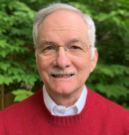 William W. Woessner, PhD, is a Montana University System Emeritus Regents’ Professor of Hydrogeology. He taught introductory and graduate courses in the hydrogeological sciences including well design and hydraulic testing for over 30 years at the University of Montana, Missoula, USA. Professor Woessner is the Past Acting Director of the Center for Riverine Science and Stream Re‑naturalization, and President of Woessner Hydrologic, LLC. He has mentored over 60 graduate students, many of whom have founded environmental consulting firms; worked for environmental non‑profits; local, state, and federal agencies, and corporations. He has designed and installed production wells, hundreds of monitoring wells, and executed hydraulic testing of confined, leaky, and water table systems. Professor Woessner is well versed in field methods and application of modeling tools. He is the coauthor of two editions of Applied Groundwater Modeling: Simulation of Flow and Advective Transport. He served as a 2011 Fulbright Scholar‑NAWI Austria. Professor Woessner is a Fellow of the Geological Society of America, served as the Geological Society of America Hydrogeology Division Birdsall‑Dreiss Lecturer in 2005, and received the society’s 2020 O. E. Meinzer Award. In addition, he is a Fellow and Life Member of the National Groundwater Association and was awarded the John Hem Excellence in Science and Engineering Award in 2008. He also authored two earlier Groundwater Project books: Hydrogeologic Properties of Earth Materials and Principles of Groundwater Flow (Woessner & Poeter, 2020) and Groundwater ‑ Surface Water Exchange (Woessner, 2020).
 A. Campbell Stringer, MS, PG, is a Principal Hydrogeologist with NewFields in Missoula, Montana, USA. Cam has over 30 years of consulting experience in hydrogeology; aquifer characterization; aquifer testing; water rights; public water supply development; remedial investigation; landfill permitting; mine permitting and remediation; corrective measure implementation; Comprehensive Environmental Response, Compensation and Liability Act (CERCLA); NEPA analysis; remedial investigation; and municipal water supply exploration, installation, and permitting. He has worked on projects across the USA and internationally on sites impacted by halogenated organic solvents, petroleum hydrocarbon fuels, radioactive elements, metals, and inorganic ions. Cam specializes in conceptual model development, 3‑D groundwater modeling, groundwater‑surface water interaction, multi‑phase fluid flow, contaminant fate and transport theory, and natural attenuation of organic contaminants. He has developed numerical regional and local scale models for water rights applications, mines, electrical generation facilities, superfund sites, petroleum release sites, uranium mill sites. Cam has extensive experience in the mining industry, providing services ranging from permitting new mines, developing water management and closure plans at active mines, and remediating legacy mines. He currently serves as a member of Independent Tailings Review Boards for mines in South America.
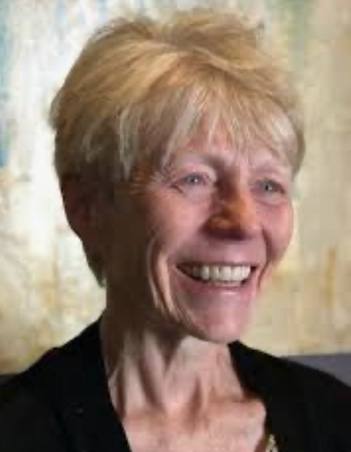 Eileen P. Poeter, P.E., is an Emeritus Professor of Geological Engineering at Colorado School of Mines where she taught groundwater courses and advised more than 40 graduate students who worked with her on groundwater system investigations and modeling research projects. She is also past director of the Integrated Groundwater Modeling Center and retired president of Poeter Engineering. With 40 years of experience modeling groundwater systems, she has consulted to attorneys, industries, engineering companies, government agencies, research labs, and citizen groups on groundwater modeling projects for aquifer storage and recovery; slurry wall performance; drainage at proposed nuclear power plant facilities; regional groundwater management; large‑scale regional pumping; dam seepage; contaminant migration; impacts of dewatering; and stream‑aquifer interaction. Dr. Poeter is an author of groundwater modeling software including evaluation of model sensitivity, assessment of data needs, model calibration, selection and ranking of models, and evaluation of predictive uncertainty. She was the National Groundwater Association (NGWA) Darcy Lecturer in 2006 and received their M. King Hubbert award in 2017 as well as being a NGWA Fellow and Life Member. She also authored three earlier Groundwater Project books: Groundwater in Our Water Cycle (Poeter et al., 2020), Hydrogeologic Properties of Earth Materials and Principles of Groundwater Flow (Woessner & Poeter, 2020), and Graphical Construction of Groundwater Flow Nets (Poeter & Hsieh, 2020).
Please consider signing up for the GW‑Project mailing list to stay informed about new book releases, events, and ways to participate in the GW‑Project. When you sign up for our email list, it helps us build a global groundwater community. Sign up↗.