
OVERVIEW
This book introduces how hydraulic testing is used to derive field‑scale values of hydrogeologic properties using three basic hydraulic testing methods: pumping tests, slug tests, and packer tests. The introductory material describes the response of the groundwater system to testing and approaches used to analyze test data. Section 1, Introduction, states the goal, provides a general definition of hydraulic testing, and describes the response of a groundwater system to testing. Section 2, Types of Hydraulic Tests, defines three types of hydraulic testing applied by hydrogeologists and concludes with a subsection explaining the organization of the remainder of the book. The overview section is followed by three parts: Pumping Tests, Slug Tests, and Packer Tests.
For students and professionals who are new to the topic of hydraulic testing emphasis should be placed on reading the material provided in the Part 1, Pumping Tests, Sections 1 through 11 and Part 2, Slug Tests, Section 14. Practitioners more familiar with hydraulic testing will find much of the material presented in Parts 1 and 2 similar to material they have been exposed to previously. Practicing hydrogeologists will likely be interested in the content of Section 12 that addresses methods used to analyze tests of a single pumping well; Section 13 that describes the use of software to analyze pumping tests; Section 15 about methods to conduct and analyze packer tests; and Section 16 that summarizes methods to determine hydraulic properties of low permeable material.
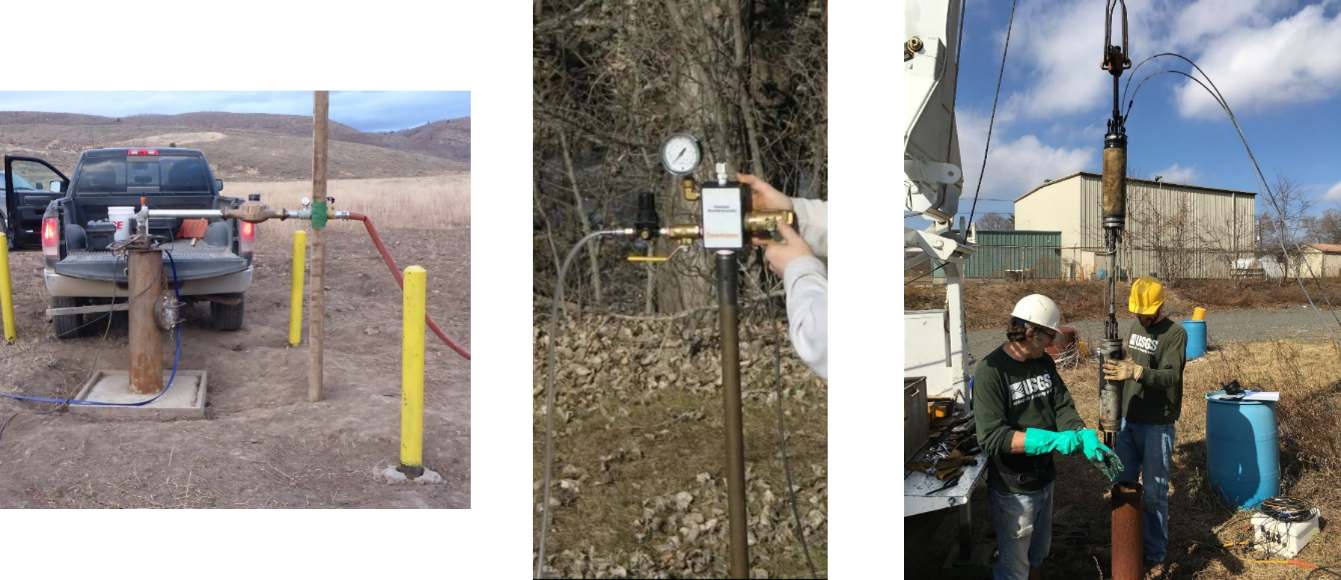
Pumping Test Slug Test Testing with Packers
These images show examples of equipment set up used for pumping, pneumatic slug, and testing with packers. The photography is used with permission: pumping test (Newfields-Missoula, MT, USA), slug test (geoprobe.com), and packer test (https://www.usgs.gov/media/images/photograph-usgs-hydrologists-and-packers-well-testing↗).